
Businesses today need to adapt quickly to changing technologies, customer expectations, and project requirements. However, building a full-time technology team for every new project can be expensive and time-consuming. This is where IT staff augmentation provides a practical solution.
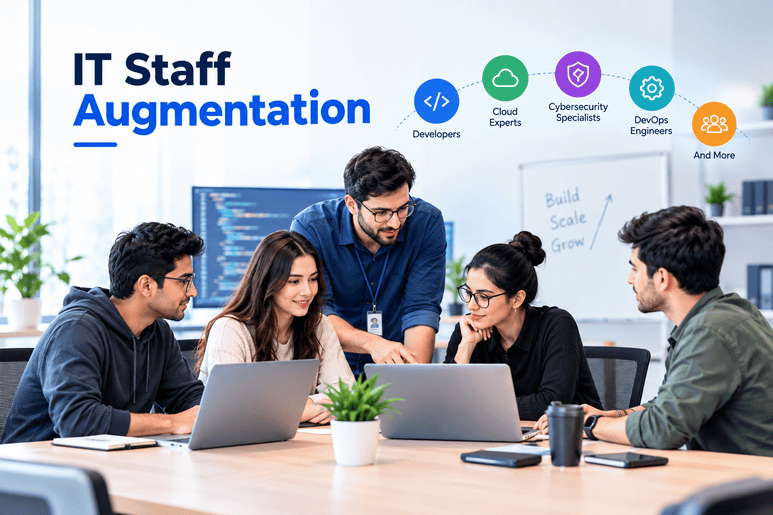
IT staff augmentation promotes companies to add skilled technology experts to their existing teams for a specific period or project. Instead of hiring permanent employees for every skill requirement, businesses can bring in external developers, engineers, designers, testers, or other IT specialists when they need them.
What Is IT Staff Augmentation?
IT staff augmentation is a workforce model in which a company complements its internal technology team with external IT professionals. These specialists work alongside existing employees and follow the company’s processes, tools, communication methods, and project objectives.
For example, a company may have a strong software development team but lack experienced cybersecurity specialists. Instead of hiring permanent cybersecurity experts, the company can use IT staff augmentation to bring qualified professionals onto the project for the required period of time.
The organization generally sustains control over project management and priorities, while the augmented professionals contribute their technical expertise.
How Does IT Staff Augmentation Work?
The process is relatively straightforward and can be adapted to different project requirements.
1. Identify the Skill Gap
The first step is to determine which skills are missing from the existing team. This could include software development, cloud computing, artificial intelligence, DevOps, cybersecurity, quality control, or UI/UX design.
2. Define Project Requirements
The company determines how many specialists are required, what level of experience they should have, and how long they are expected to work on the project.
3. Select IT Professionals
An IT staffing provider or technology partner pinpoint professionals who match the required technical skills and experience.
4. Integrate the Professionals
The selected specialists join the internal team and become part of the existing workflow. They may communicate through the company’s preferred collaboration platforms and use its development tools and project management systems.
5. Scale the Team When Needed
Once the project requirements change, the company can increase or decrease the number of augmented professionals without going through a conventional permanent hiring process.
Key Benefits of IT Staff Augmentation
There are several reasons why organizations use IT staff augmentation to support technology projects.
Access to Specialized Skills
Technology projects often require highly specific expertise. Finding permanent employees with every required skill can be challenging.
Staff augmentation provides access to professionals with experience in areas such as:
- Artificial intelligence and machine learning
- Cloud computing
- Cybersecurity
- Software development
- Data engineering
- DevOps
- Mobile application development
- Quality assurance
- UI/UX design
This allows companies to fill technical gaps without completely restructuring their internal teams.
Greater Workforce Flexibility
Project requirements can change instantly. A business may need five developers during one phase of a project and fewer specialists after development is completed.
With IT staff augmentation, organizations can adjust their workforce according to current requirements.
Faster Hiring
Traditional enlistment can take weeks or even months, particularly when companies are looking for highly specialized technical professionals.
Staff augmentation can shorten this process by allowing businesses to access an existing pool of qualified professionals.
Cost Management
Hiring permanent employees involves more than salary. Companies may also need to consider benefits, recruitment costs, onboarding, training, equipment, and other employment expenses.
For projects requiring temporary expertise, augmenting the existing team can provide a more flexible approach to workforce spending.
Better Project Scalability
A technology team may need additional developers before a major product release or additional QA specialists before deployment.
IT staff augmentation makes it easier to scale the team during these high-demand periods.
IT Staff Augmentation vs. Traditional Hiring
Traditional hiring is generally designed for long-term employment. A company searches for candidates, conducts interviews, completes onboarding, and adds employees to its permanent workforce.
IT staff augmentation is more flexible. External specialists are brought in according to project requirements and can work with the internal team for a defined period.
The two models are not necessarily competitors. Many organizations use permanent employees for their core operations while using augmented professionals for specialized or temporary requirements.
IT Staff Augmentation vs. Outsourcing
IT staff augmentation and outsourcing are often confused, but they operate differently.
With staff augmentation, external professionals typically become an extension of the company’s existing team. The client generally retains greater control over daily tasks, communication, and project direction.
With outsourcing, an external company may take responsibility for delivering an entire project, application, or business function.
For example, if a company needs three additional React developers to work with its previously working engineering team, staff augmentation may be suitable. If the company wants another organization to build and deliver an entire software application, outsourcing may be more apt.
When Should a Business Consider IT Staff Augmentation?
IT staff augmentation can be useful in several scenarios.
Short-Term Projects
Businesses can add professionals for projects that have a defined beginning and end.
Strict Development Deadlines
When a product launch is approaching, additional developers, testers, or DevOps professionals can help expand the project team.
Specialized Technology Requirements
Companies may need expertise that does not exist internally, particularly when adopting emerging technologies.
Employee Skill Gaps
A business may have a capable development team but require additional knowledge in cloud infrastructure, cybersecurity, AI, or data analytics.
Swift Business Growth
Growing organizations may need to expand their technology teams faster than traditional recruitment allows.
Common Roles in IT Staff Augmentation
Organizations can augment their teams with professionals across many technology disciplines, including:
- Software developers
- Full-stack developers
- Front-end developers
- Back-end developers
- Mobile developers
- DevOps engineers
- Cloud engineers
- Data scientists
- Machine learning engineers
- Cybersecurity specialists
- QA engineers
- UI/UX designers
- Business analysts
- Project managers
The appropriate roles depend on the project’s technical requirements and business objectives.
How to Choose the Right IT Staff Augmentation Partner
Choosing the right technology staffing partner is important because the quality of external professionals can directly affect project performance.
Consider the following factors:
Technical Expertise
Review whether the provider has professionals with experience in the technologies required for your project.
Industry Experience
Experience in your particular industry can help professionals understand regulatory requirements, customer expectations, and common business challenges.
Communication
Clear communication is fundamental when external professionals work with an internal team. Consider time zones, communication channels, reporting processes, and collaboration tools.
Security Practices
Technology professionals may have access to source code, databases, cloud environments, and other sensitive resources. Evaluate the provider’s security procedures before conferring access.
Scalability
A good staffing partner should be able to help you increase or reduce team power as project requirements change.
Best Practices for Successful IT Staff Augmentation
Simply adding external professionals to a project does not guarantee success. Businesses should set up a clear working structure from the beginning.
Set clear responsibilities, project objectives, deadlines, and communication assumptions. Provide external team members with the documentation and access they need to perform their roles effectively.
It is also important to include augmented professionals in relevant meetings and collaboration processes. Treating them as an integrated part of the project team can improve communication and reduce gratuitous delays.
Regular performance reviews can also help identify problems early and ensure that the project remains on track.
The Future of IT Staff Augmentation
As technology continues to evolve, companies are likely to face increasing demand for specialized technical skills. Artificial intelligence, cloud computing, cybersecurity, automation, and data engineering are examples of areas where organizations may need expertise that is difficult to maintain entirely in-house.
IT staff augmentation provides businesses with a flexible way to respond to these changing requirements. Instead of maintaining a large perpetual workforce for every possible technology need, companies can combine their core internal teams with specialized professionals when necessary.
Final Thoughts
IT staff augmentation offers businesses a flexible approach to expanding their technology capabilities. It can help organizations approach specialized skills, scale teams according to project requirements, and respond more quickly to changing technology demands.
For companies working on short-term projects, facing technical skill gaps, or experiencing rapid growth, staff augmentation can complement an existing technology team without requiring every specialist to become a permanent employee.
The most effective approach depends on the company’s project goals, budget, security requirements, technical needs, and favored management structure. By carefully defining requirements and selecting qualified professionals, organizations can build a flexible technology workforce that supports both immediate projects and long-term digital initiatives.
